Chronic Sinusitis: Causes, Diagnostic CT, and Endoscopic Treatment (FESS)

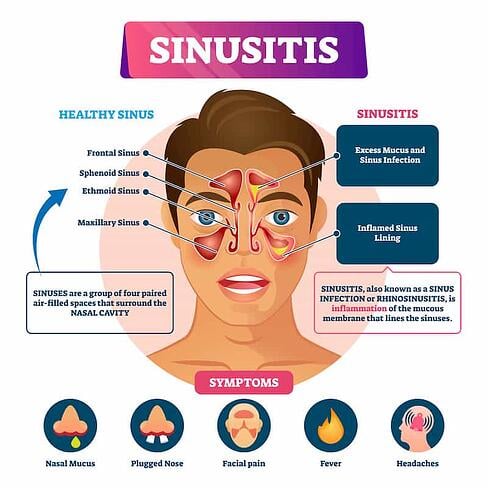
The paranasal sinuses are air-filled anatomical cavities situated within the facial skeleton and skull base, communicating directly with the nasal airway through narrow anatomical drainage channels called ostia. These sinuses—categorized into maxillary, ethmoid, frontal, and sphenoid sinuses—are lined by pseudostratified ciliated respiratory epithelium. Their primary physiological functions include humidifying and warming inspired air, secreting protective mucus, filtering inhaled particulate matter via mucociliary clearance, providing immune defense, and lightening the weight of the craniofacial skeleton.
Chronic sinusitis (chronic rhinosinusitis / CRS) is defined clinically as persistent mucosal inflammation of the paranasal sinuses lasting longer than 12 consecutive weeks despite appropriate medical therapy. CRS significantly impairs quality of life, leading to chronic facial fatigue, breathing difficulties, and sleep disturbances.
What Causes Chronic Sinusitis?
Chronic rhinosinusitis arises from an intricate interplay of anatomical mechanical blockages, chronic mucosal inflammation, and recurrent microbiological infections:
- Anatomical Osteomeatal Blockage: A severe deviated nasal septum (septal deviation), hypertrophied middle turbinates (concha bullosa), or narrow ostiomeatal complex channels impair natural sinus drainage, causing chronic mucus stasis.
- Nasal Polyposis: Benign, tear-shaped mucosal polyps growing in the sinus cavities and nasal passages that physically obstruct airflow and drainage pathways.
- Allergic Rhinitis and Environmental Irritants: Chronic airborne allergens, airborne dust, active cigarette smoke exposure, and occupational toxins triggering continuous mucosal edema.
- Biofilm-Forming Bacterial or Fungal Colonization: Resistant microbial communities that persist in poorly ventilated sinus cavities despite oral antibiotic courses.
- Impaired Mucociliary Clearance: Genetic or acquired defects in the microscopic ciliary hairs responsible for sweeping mucus out of the sinuses.
Clinical Symptoms of Chronic Sinusitis
Patients with chronic sinusitis typically present with two or more of the following cardinal clinical signs:
- Persistent nasal obstruction, chronic congestion, and restricted nasal breathing
- Thick, discolored purulent nasal discharge or chronic post-nasal drip trickling down the back of the throat
- Facial pressure, pain, and fullness localized over the maxillary cheeks, periorbital zone, or forehead
- Hyposmia or anosmia (diminished or complete loss of the sense of smell and taste)
- Secondary symptoms: chronic throat clearing, persistent cough, morning halitosis, ear fullness, and persistent fatigue
Diagnostic Evaluation
Accurate diagnosis requires direct anatomical and radiological visualization:
- Rigid or Flexible Nasal Endoscopy: Office-based endoscopic examination utilizing high-definition miniature cameras to inspect the middle meatus, identify mucosal edema, detect purulent secretions, and examine for occult nasal polyps.
- High-Resolution Paranasal Sinus CT (Non-Contrast): The definitive gold-standard diagnostic modality. Computed tomography accurately maps bony sinus anatomy, confirms mucosal thickening, identifies fluid levels, and provides an essential anatomical roadmap for surgical planning.
Treatment Options: Medical Management vs. Endoscopic Surgery (FESS)
Treatment begins with comprehensive medical therapy. When conservative medical measures fail to resolve chronic inflammation or when severe anatomical obstructions persist, minimally invasive surgery is indicated:
- 1. Conservative Medical Regimen: High-volume buffered saline nasal rinses to clear stagnant mucus; intranasal corticosteroid sprays to reduce mucosal inflammation; targeted culture-guided antibiotics; and short courses of oral corticosteroids for extensive polyposis.
- 2. Functional Endoscopic Sinus Surgery (FESS): The gold-standard surgical approach. Performed entirely through the nostrils under general anesthesia using high-definition endoscopes and microdebriders, FESS involves no external facial incisions. The surgeon widens the natural drainage pathways of the ostiomeatal complex, resects obstructive polyps, and evacuates chronic trapped secretions while preserving healthy mucosal tissue.
- 3. Concomitant Septoplasty and Turbinate Reduction: Frequently combined with FESS to correct a deviated nasal septum and reduce hypertrophied inferior turbinates, ensuring wide, unobstructed bilateral airflow.
Preventative Measures and Long-Term Sinus Care
To prevent recurrent sinus flare-ups following treatment, patients should maintain regular nasal hygiene with isotonic saline irrigations, use indoor humidifiers during dry winter heating seasons, avoid exposure to active and secondhand tobacco smoke, manage seasonal allergies proactively, and seek prompt medical attention for acute upper respiratory infections.
Learn more about related nasal procedures: Septoplasty (Deviated Septum Surgery)
Clinical case updates and surgical insights on Instagram: https://www.instagram.com/drsamisamin/